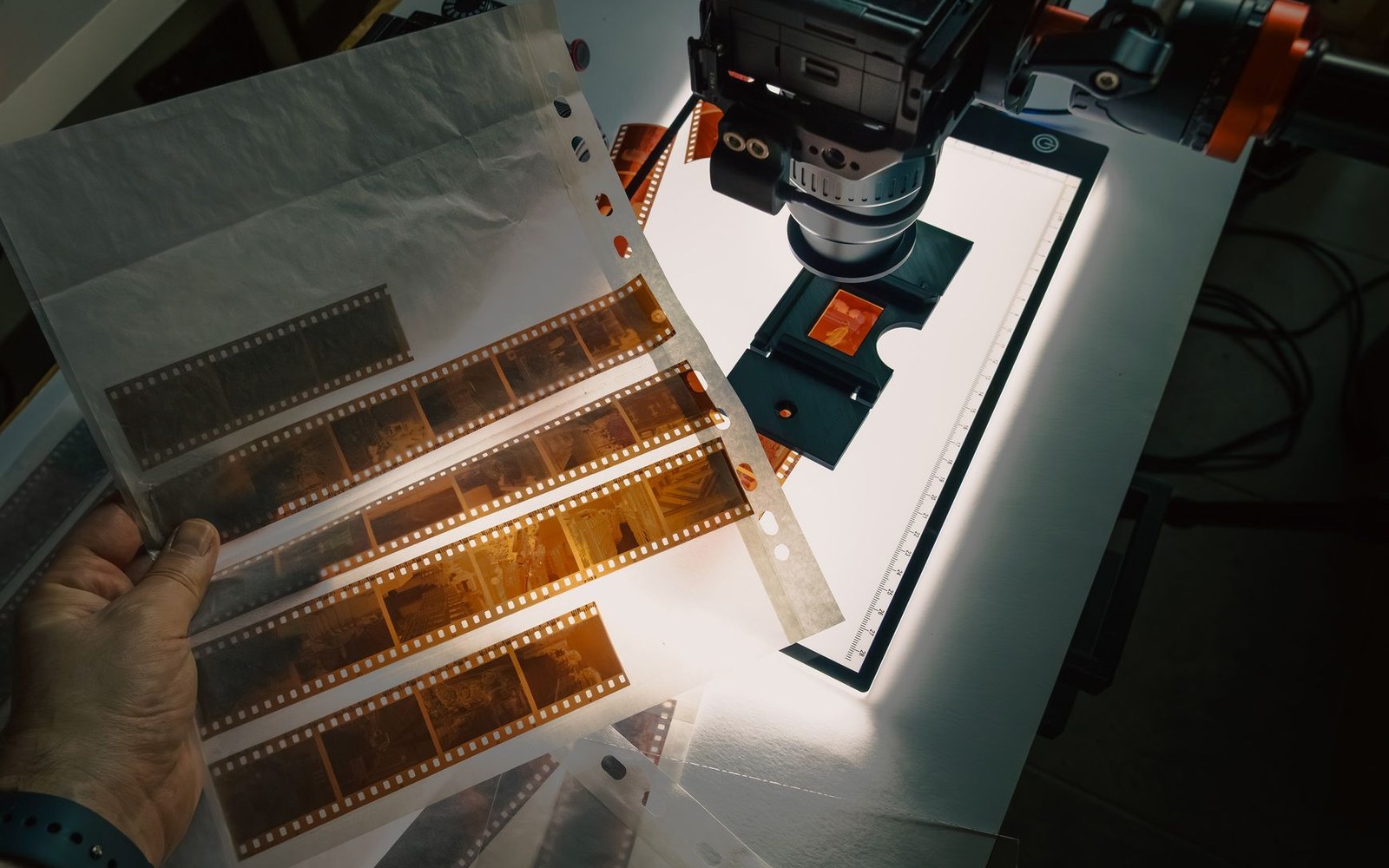
The Internet Archive's moving-image collection is among the largest freely accessible repositories of digitised film in the world, holding hundreds of thousands of items that range from Edison-era actualities to mid-century industrial films to television news footage. Its scale is genuine. So is the confusion it regularly generates among researchers who conflate two distinct things: the public-domain status of a film and the existence of a usable digital copy.
The Archive operates as a San Francisco–based nonprofit, and its moving-image collection is open to anyone without registration or fee. Items can be streamed or downloaded in formats that vary widely in resolution and archival quality. Some files derive from 35mm prints digitised at institutions with proper film-handling infrastructure; others were uploaded from degraded VHS dubs, third-generation dupes, or prints with missing frames, faded colour, or damaged sound. The Archive does not curate in the traditional sense — it collects and hosts, and the quality of what it holds reflects the quality of what was donated or uploaded.
The Prelinger Collection Inside It
 03.01
03.01The most coherent and research-grade sub-collection within the Archive's moving-image holdings is the Prelinger Archives. Rick Prelinger began assembling ephemeral films — industrial, educational, advertising, and government-sponsored titles — in the 1980s, eventually building a collection of roughly 60,000 items before donating a significant portion to the Library of Congress. A large subset was simultaneously made available through the Internet Archive, where it remains one of the most-used research collections on the platform.
The Prelinger material skews heavily toward mid-twentieth-century American non-theatrical production. Because these films were often made for limited circulation rather than commercial release, many were never registered for copyright or were distributed without proper notice — conditions that rendered them public domain at the moment of publication. That legal status, however, was established by the documentary record, not by the Archive's hosting of them. Ephemeral films entered the public domain through formality failure or expiration, not because they appear on a particular platform.
Reading Status from the Record, Not the URL
A film appearing freely on the Internet Archive is not, by that fact alone, in the public domain. The Archive hosts some material under Creative Commons licences, some under fair-use claims, and some where rights status is listed simply as "Not determined." Researchers relying on the Archive's own metadata fields for copyright status are reading a filing system, not a legal analysis. The authoritative sources remain the Copyright Office's records, including the digitised Catalog of Copyright Entries, and for pre-1964 works the renewal databases maintained by Stanford University Libraries.
The inverse error is equally common: assuming that because a title is public domain, a clean digital copy must exist and be findable at the Archive. Many public-domain films survive only in fragmentary or severely deteriorated prints held by the George Eastman Museum, the Museum of Modern Art, or the Cineteca di Bologna. Those institutions preserve archival materials under controlled conditions; their digitised outputs, when they exist, may carry separate rights as derivative works if sufficient creative effort went into the restoration — a distinction that applies regardless of the underlying film's status.
What It Is Good For
For researchers, the Archive is most reliable as a discovery tool and a source for establishing that a particular title circulated widely enough to produce multiple surviving copies. It is valuable for ephemeral and industrial material, for silent-era footage, and for works where the copyright record is unambiguous. It is least reliable where quality matters — where a documentary maker needs broadcast-grade footage, or where an archivist needs to verify a title's full print survival. In those cases, the Archive is a starting point, not a destination, and the actual research moves to institutional holdings, the National Film Registry, and the Copyright Office catalogue itself.