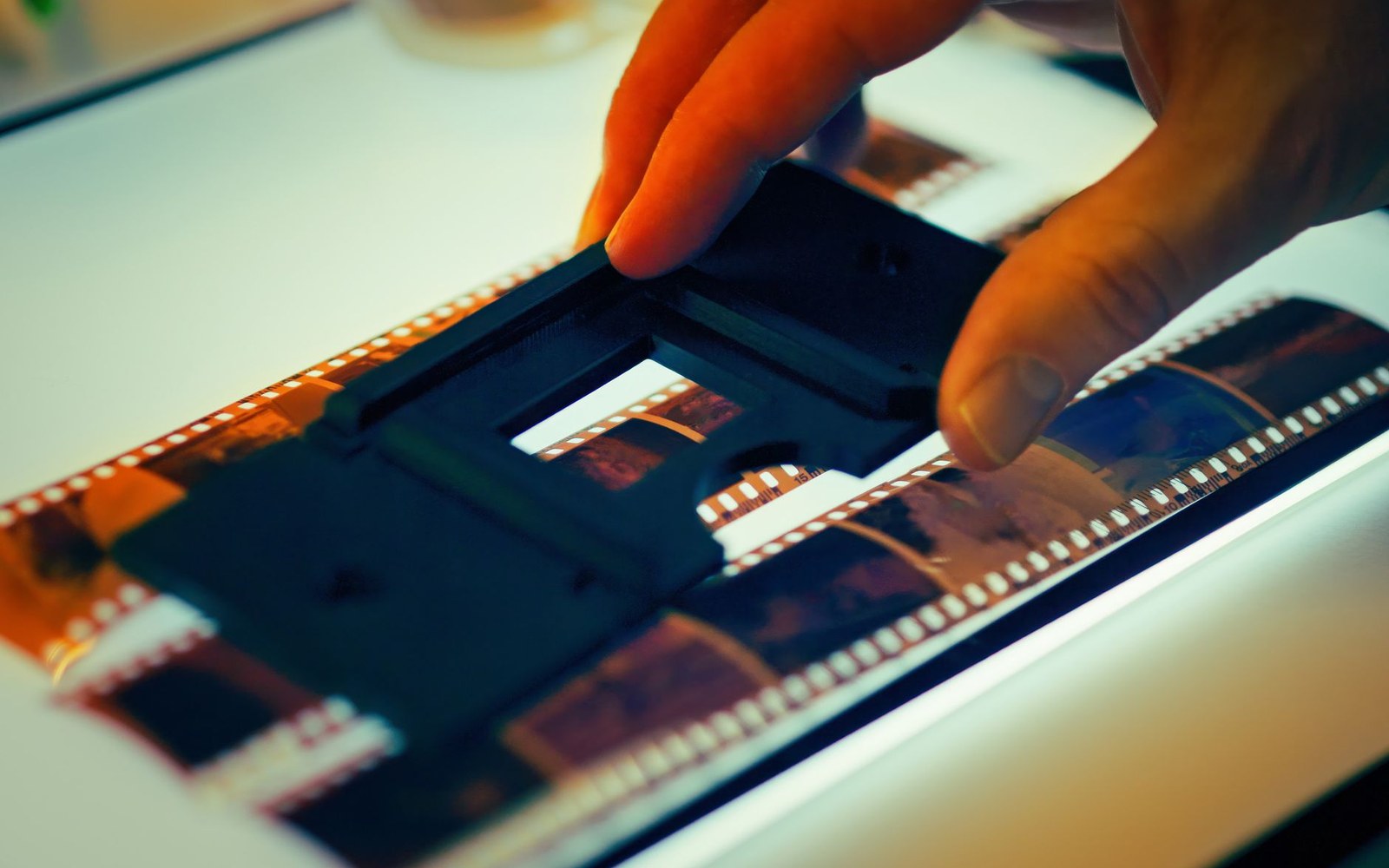
A digital restoration of a public-domain film can carry its own copyright — separate from, and regardless of, the status of the underlying work.
Why the Underlying Film and the Restoration Are Different Things
When a film enters the public domain, what enters is the creative expression fixed in the original work — every frame, every edit, every title card as it was first published. What does not enter is any new creative expression added by a later party. Copyright law protects derivative works, provided they meet the threshold of originality: the minimum degree of creative expression required to qualify for independent protection. A restoration that involves nothing more than mechanical duplication — running an old print through a flatbed scanner without adjustment — almost certainly falls below that threshold. A restoration involving thousands of hours of frame-by-frame color grading, the reconstruction of missing sequences from multiple source prints, and original editorial decisions about how to fill archival lacunae almost certainly does not.
 03.04
03.04The legal framework here descends from the 1976 Copyright Act's treatment of derivative works, which Congress extended and the Supreme Court has confirmed: new material layered onto public-domain material can be separately protected, but only that new material, not the underlying work it rests on. The principle that a derivative work carries its own copyright independent of the underlying material is established doctrine. A restorer who invests original creative judgment in reconstruction gains a copyright in those contributions; everyone else retains the right to access the original public-domain film through any other surviving source.
Two Worked Examples
The 2010 restoration of Metropolis (1927), shepherded by the Friedrich-Wilhelm-Murnau-Stiftung with distribution through Kino Lorber in the United States, illustrates how layered this can become. The restoration incorporated a degraded 16 mm print discovered in Buenos Aires in 2008, restoring approximately twenty-five minutes of footage long considered lost. The restorers made specific, documentable creative decisions about frame rate, tinting, and the integration of damaged sequences — decisions that constitute expression, not mere mechanics. Kino Lorber's release carries a copyright notice covering the restoration as a derivative work. The underlying Metropolis remains in the public domain in the United States, having been published in 1927; anyone may work from an alternative surviving print. But working from the Kino Lorber restoration — copying its specific editorial choices and color decisions — is a different matter.
The Cineteca di Bologna's work on Nosferatu (1922) presents the same structure. The Cineteca assembled restoration elements from multiple archival sources across Europe, applying both photochemical and digital processes to produce a version that differs materially from any single surviving print. The restoration reflects original choices about which source to privilege frame by frame, how to handle deteriorated emulsion, and how to reconstruct titles from documentary evidence. The Cineteca's copyright claim attaches to those choices. The 1922 film itself entered the public domain in the United States long ago, but a researcher who wants to reproduce frames from the Cineteca version without permission is not simply reproducing Murnau.
What This Means for Researchers and Archivists
The practical consequence is that public-domain status must be assessed at two levels simultaneously. First: is the underlying film free? Second: which version is being used, and does that version carry a derivative-work copyright? Institutions holding their own archival elements — the Library of Congress holds original nitrate and preservation materials on many titles — offer a route to the public-domain material that bypasses any restoration copyright entirely. The Internet Archive's moving-image collection similarly provides access to transfers made from elements predating modern restorations.
The restored print is not the film. It is a new work resting on a free one. Both facts matter, and conflating them is the error.