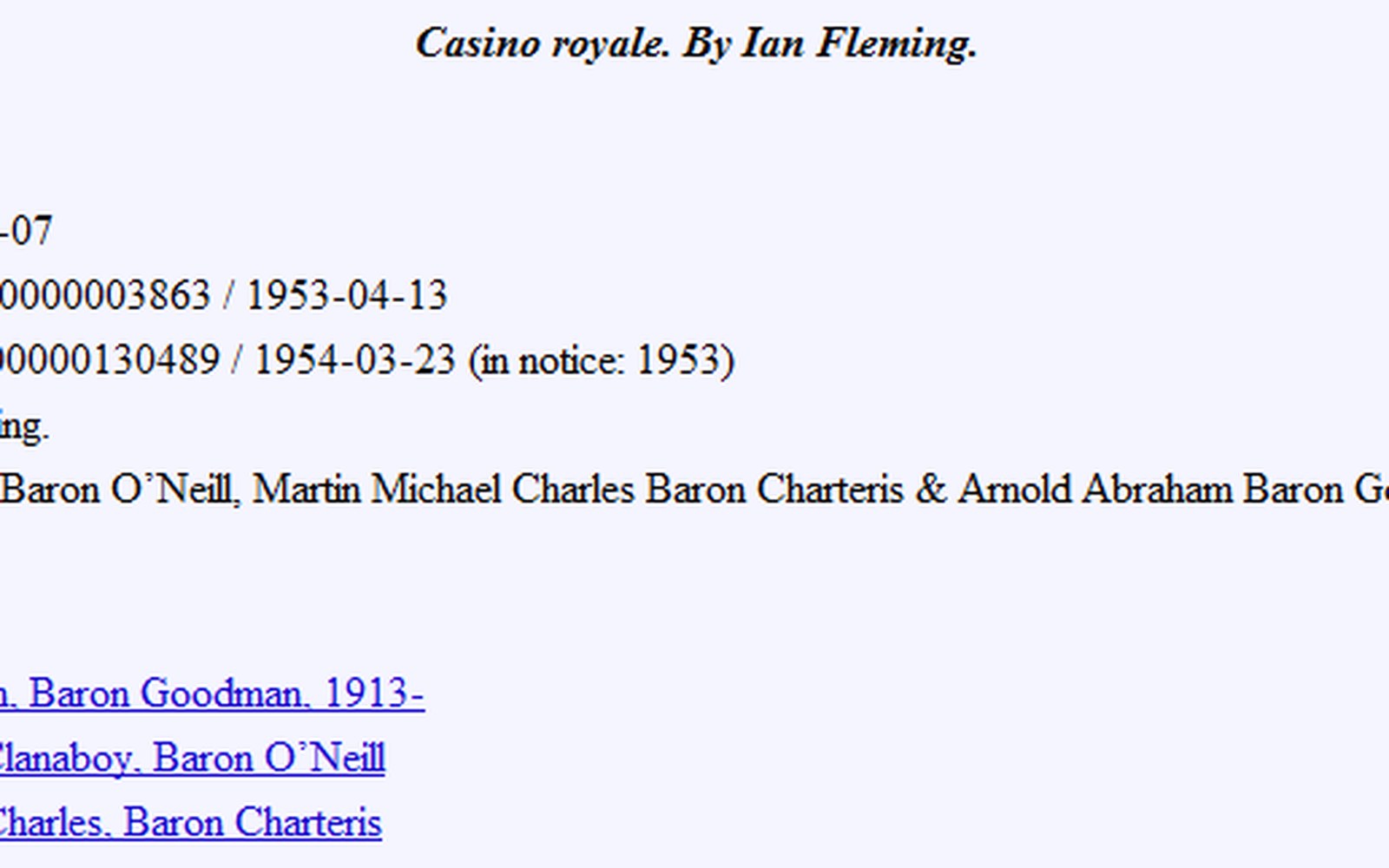
The Sonny Bono Act set a hard ceiling of 95 years for pre-1978 films with valid notice and renewal — and the arithmetic is relentless.
What the Sonny Bono Act Actually Changed
Before 1998, the maximum copyright term for a work published before 1978 with proper notice and a timely renewal registration was 75 years. The Sonny Bono Copyright Term Extension Act, signed into law on 27 October 1998, added 20 years to that ceiling, raising it to 95. Works already in their second term got the extension automatically; works not yet published got a different formula entirely. For the category that matters most to film researchers — theatrical features and shorts published before 1978 with notice and renewal intact — the operative rule is now simple: 95 years from the year of publication, expiring on 1 January of the 96th calendar year.
 01.01
01.01That date-of-expiry rule comes from section 305 of the Copyright Act, which provides that all terms run through 31 December of their final year. The practical consequence is that a film released at any point during 1929 — whether in January or late December — loses its copyright on the same date: 1 January 2025. A film released at any point during 1930 loses its copyright on 1 January 2026. The calendar does not care about premiere dates within the year; it cares only about the year of publication.
Running the Arithmetic
The calculation is straightforward but worth stating precisely, because it trips up researchers who apply it to the wrong baseline. A 1929 film published with proper copyright notice entered a first term of 28 years expiring in 1957. If the rightsholder filed a renewal registration in that 28th year — the requirement under the 1909 Act for works whose first terms predated the 1992 amendment that made renewal automatic for works published from 1964 onward — the work entered a second term. Under the original 1976 Act, that second term would have run to 75 years total, meaning 2004. The Sonny Bono extension moved the ceiling to 95 years, meaning 2024. Section 305 converts "2024" into "through 31 December 2024," which means the work is free as of 1 January 2025.
The same chain for 1930 films: first term through 1958, renewal filed, second term extended to 95 years total, expiration through 31 December 2025, free on 1 January 2026. Any year back to the early sound era follows the same formula. The only variables are whether notice appeared on release prints and whether the renewal was actually filed — both of which must be confirmed against the Copyright Office's Catalog of Copyright Entries before treating any title as definitively free. A film that failed either formality entered the public domain far earlier and by a different route entirely.
What the Ceiling Does Not Cover
The 95-year term applies only to works that cleared both formalities. It says nothing about works whose notice was defective or absent, works whose renewals were never filed before 1964, or foreign works whose copyright was restored under the Uruguay Round Agreements Act of 1994. Those titles have their own, often messier, status analyses. Nor does the 95-year term govern the copyright in a new derivative work — a digital restoration, for instance — layered on top of an underlying film that has crossed the line. The underlying film is free; the restoration may not be.
The ceiling also does not touch the musical score embedded in a film's soundtrack, which may carry a separate term running from the composer's death under life-plus-70 rules. Researchers confirming that a 1929 or 1930 film has crossed the 95-year term should treat that confirmation as a starting point, not a finish line. The film's images are free. Everything else needs its own check.