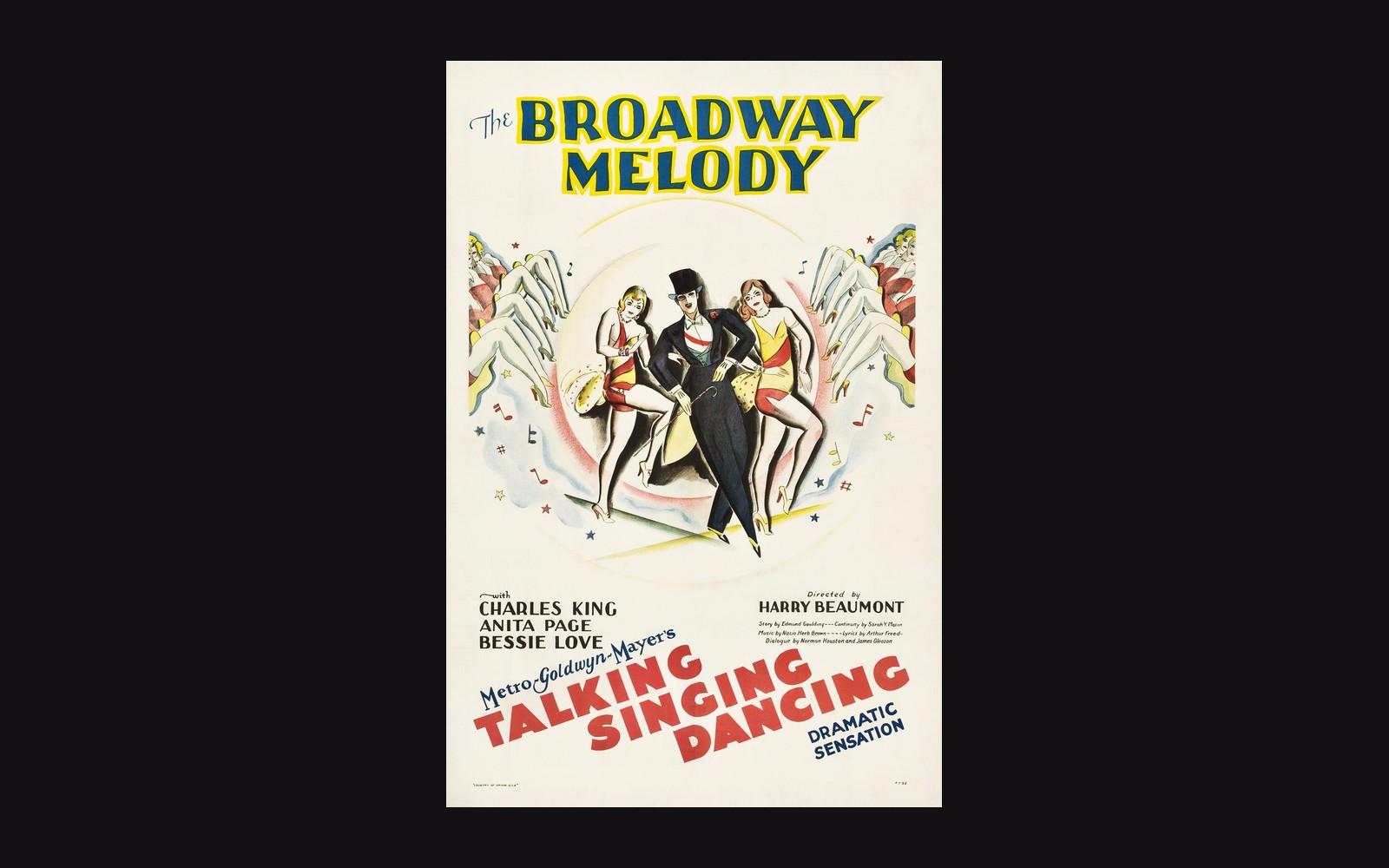
How the renewal deadline claimed a wave of 1929 features — and what survives of them now
The Mechanic of the Missed Deadline
Every film registered for copyright in 1929 faced a critical moment in 1957: file a renewal with the United States Copyright Office or lose protection permanently. Under the Copyright Act of 1909, the rule was binary — renew in the twenty-eighth year or the work fell into the public domain the moment that window closed. No grace period, no cure, no second chance. Studios that survived to 1957 generally renewed their valuable sound pictures without incident. The casualties were films whose producers had folded, whose rights had changed hands without paperwork, or whose commercial afterlife seemed too thin to justify a filing fee.
 02.03
02.03That binary rule is why a substantial tranche of 1929 titles entered the public domain in 1957, decades before the rest of the 1929 cohort reached the end of its term on 1 January 2025. The 1929 cohort's twenty-eighth year fell in 1957, and whatever was not renewed then is freely usable today — not because any recent law extended the public domain, but because a failure that happened nearly seven decades ago cannot be undone.
What the Catalog Shows — and Doesn't
The primary instrument for establishing renewal status is the Catalog of Copyright Entries, the Copyright Office's official printed record of registrations and renewals. Researchers checking 1929 films look in the 1957 Catalog volumes for a renewal entry matching the original registration number and title. Presence of that entry closes the question; absence opens it, but absence alone is not conclusive — clerical errors existed, and researchers should also search the Copyright Office's online records, which extend back to 1978 for renewals but must be supplemented by the printed Catalog for the 1957 window.
Major studios — MGM, Paramount, Warner Bros., Universal — renewed systematically in 1957. Their 1929 sound pictures, newly valuable as talkies that audiences still remembered, carried renewal registrations almost without exception. Smaller outfits tell a different story. Poverty Row producers such as Tiffany Pictures and Sono Art-World Wide Pictures released a stream of early-talkie programmers in 1929; many of those companies were dormant or dissolved by 1957, and their renewal records are sparse to nonexistent. Several independent westerns and melodramas from that tier entered the public domain without any corporate heir even noticing.
Titles, Studios, and Surviving Prints
Among the 1929 features now confirmed in the public domain through renewal failure, a recurring category is the early talkie programmer: short-running pictures made quickly to capitalize on the sound boom, released through regional exchanges, and never treated as library assets worth protecting. Their copyright status can be verified through the printed Catalog volumes, which have been digitized and can be searched online.
Surviving prints are scattered. The Library of Congress holds nitrate and safety elements for many 1929 productions through its acquisition and preservation programs, though access to specific elements requires inquiry through the Moving Image Research Center. The George Eastman Museum in Rochester holds significant holdings from the Poverty Row era, including elements sourced from studio vaults that were dispersed during the studio consolidations of the 1950s and 1960s. The Museum of Modern Art acquired early-sound material through its film preservation programs beginning in the 1930s, and some 1929 titles exist only in those holdings.
For films whose renewal records are absent, the practical research path runs in sequence: check the 1957 Catalog volumes, cross-reference Stanford's database, search the Copyright Office's online system for any late or irregular renewal, and then consult the National Film Registry documentation if the title was selected — Registry listing does not confer copyright, but the preservation record sometimes clarifies chain of title. Where no renewal appears in any of those sources, the title is effectively public domain under the 1909 Act's formality requirements.
The 1929 cohort is historically significant beyond its legal status: these are the first full cycle of synchronized-sound features produced at scale, and their passage into the commons opens primary material for documentary use, restoration projects, and scholarly access. The twenty-eighth year that nobody filed for is now the public's permanent inheritance.