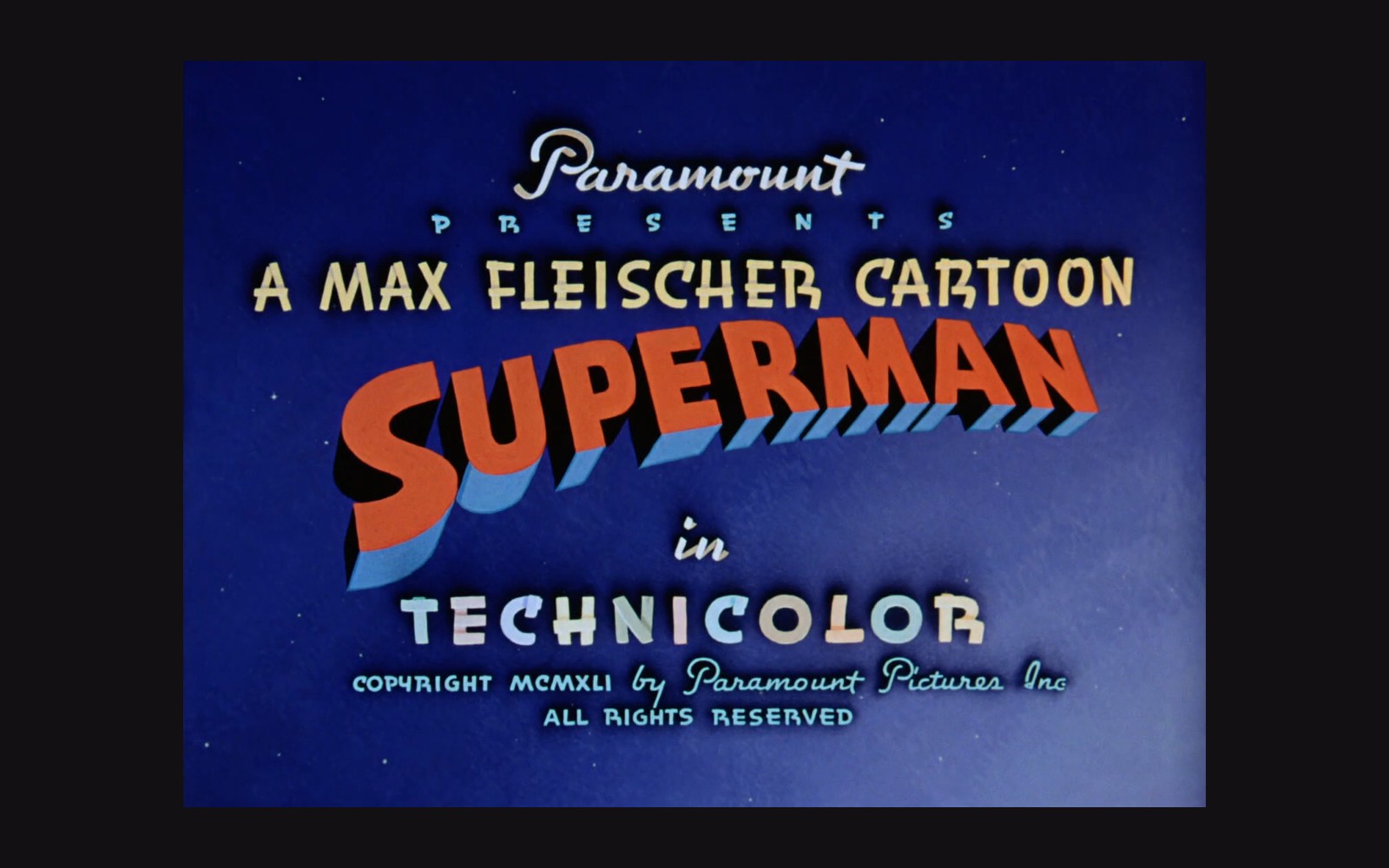
Between September 1941 and July 1943, Fleischer Studios and its successor Famous Studios produced seventeen theatrical animated shorts featuring Superman for Paramount Pictures. The films are technically accomplished — rotoscoped figures, moody Art Deco backgrounds, full orchestral scores — and they remain among the finest superhero animation ever made. They are also, every one of them, in the United States public domain, not because anyone intended to release them but because the required copyright renewal was never filed.
The mechanism is the one that claimed thousands of films from the same era. Under the Copyright Act of 1909, a work published with proper notice received an initial term of twenty-eight years. Protection for a second term required a renewal registration filed with the United States Copyright Office in the twenty-eighth year — not before, not after. Miss that window and the copyright expired permanently. Paramount held the rights to the shorts through the 1940s and into the early 1970s, when the renewals would have been due. No renewal was filed for any of the seventeen pictures.
 02.06
02.06The seventeen titles, in release order, are: Superman (the first, September 1941), The Mechanical Monsters, Billion Dollar Limited, The Arctic Giant, The Bulleteers, The Magnetic Telescope, Electric Earthquake, Volcano, and Terror on the Plain — all produced under Fleischer Studios before Max Fleischer lost control of the studio in 1942. Famous Studios, which Paramount reorganized from Fleischer's operation, completed the series with Japoteurs, Showdown, Eleventh Hour, Destruction, Inc., The Mummy Strikes, Jungle Drums, Underground World, and Secret Agent (July 1943). The split in production companies changed nothing legally: the renewal obligation fell on the copyright proprietor, Paramount, and Paramount did not act.
Confirming the lapse requires checking the Catalog of Copyright Entries, the Copyright Office's official printed record of registrations and renewals. Researchers who work through the relevant volumes — covering the Class L (motion pictures) entries for the years when renewal would have been due — find no corresponding renewal registrations for the Paramount Superman shorts. Absent those entries, the films passed into the public domain upon expiration of their initial terms, placing them freely usable without permission or royalty.
What did not enter the public domain is the Superman character. DC Comics — then National Allied Publications, later National Comics, now DC — had been licensing the character to Paramount since 1941, and that underlying intellectual property has been continuously maintained. The character's copyright and trademark protections exist independently of the films' copyright status. A filmmaker can exhibit, reproduce, or build on the seventeen shorts without licensing the films; using Superman as a character in new creative work is an entirely separate matter governed by DC's ongoing rights. The distinction between a film's public-domain status and the protected status of its source material is one the Copyright Office record cannot resolve on its own.
The practical result of the lapse has been decades of low-cost distribution. The shorts appeared on early home video from budget labels, have circulated freely through collections like the Internet Archive's moving-image collection, and are routinely encountered on public-domain DVD compilations. That wide circulation has, paradoxically, helped preserve public awareness of the films even as it complicated efforts to present definitive restorations — any restored edition may carry its own copyright as a derivative work, meaning the restoration, not the underlying film, is what the restorer controls.
The Fleischer Superman shorts stand as a clean case study in formality failure: no ambiguity about notice, no question of whether the films were published, no foreign-rights complication of the kind the URAA restoration created for works from other countries. Paramount held American copyright, the renewal deadline passed, and the films fell. The character endures under separate law; the films belong to everyone.