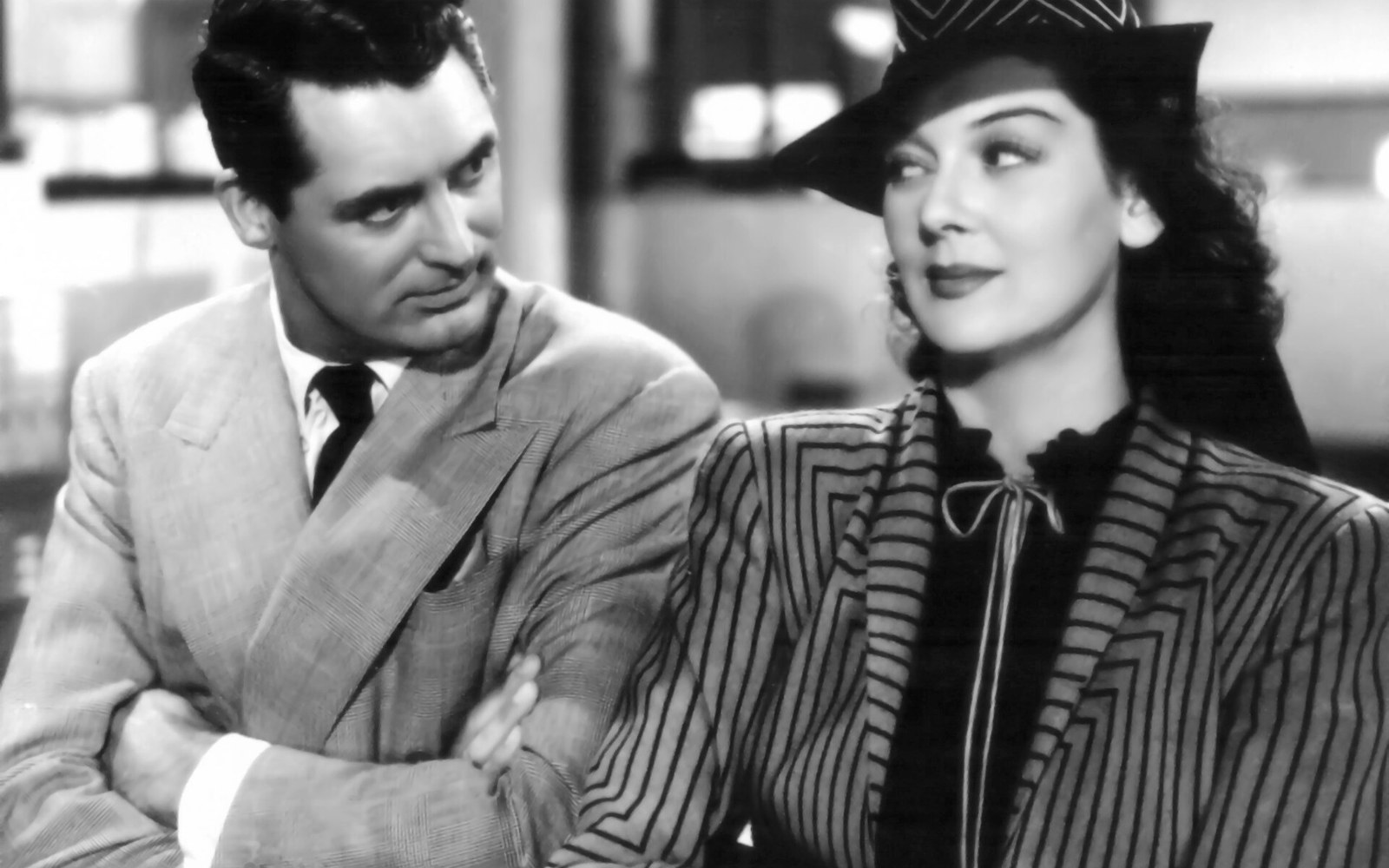
The 1940 Hawks screwball comedy is in the public domain — but the play it reworked is a separate copyright question entirely.
The Film, the Notice, and the Renewal
Howard Hawks's His Girl Friday was released by Columbia Pictures in January 1940. Columbia failed to renew the film's copyright registration in the required 28th year, and without that renewal registration, the title passed into the public domain. The Copyright Office's Catalog of Copyright Entries confirms no renewal was filed, and the film is now freely reproducible, distributable, and exhibitable without license or royalty. It is one of the most widely circulated public-domain features: prints appear in Internet Archive's moving-image collection, on budget DVDs, and in university film programs.
 02.05
02.05The free status of the film, however, stops at the film. It does not reach the underlying material.
What the Film Does Not Free
His Girl Friday is an adaptation of The Front Page, the 1928 stage comedy by Ben Hecht and Charles MacArthur. Hawks's masterstroke was sex-swapping the reporter Hildy Johnson into a woman — played by Rosalind Russell — while keeping the play's breakneck dialogue largely intact. The adaptation is close enough that the underlying work cannot be ignored.
The Front Page was published in 1928 and its copyright was properly maintained. Under the ninety-five-year term set by the Sonny Bono Copyright Term Extension Act of 1998, a work published in 1928 with valid notice and renewal remained protected until 1 January 2024, when it entered the public domain alongside other 1928 titles. That expiration matters for anyone who wants to produce a new theatrical adaptation, a screenplay derived from the play, or any work that draws on Hecht and MacArthur's original text rather than specifically from Hawks's film.
The practical consequence is narrow but real: a documentary maker may freely use footage from the 1940 film. A theater company staging The Front Page in the years before 2024 needed a license regardless of what happened to the Columbia print. A screenwriter basing a new script on the Hawks film's specific choices — the gender reversal, the added scenes — works with material from the public-domain film, but one whose ultimate source had its own separate legal biography.
This is the layered structure that research into adapted public-domain films must always account for: the film's formality failure liberates the Columbia release, not the creative property that preceded it.